

Is replacement always the more expensive but better answer?
Not always. Some lines still make good repair candidates. The better answer depends on the actual pipe condition, not on a rule that replacement always wins.
Blog Article
How to tell when a sewer line can still be repaired and when replacement becomes the more practical long-term decision.
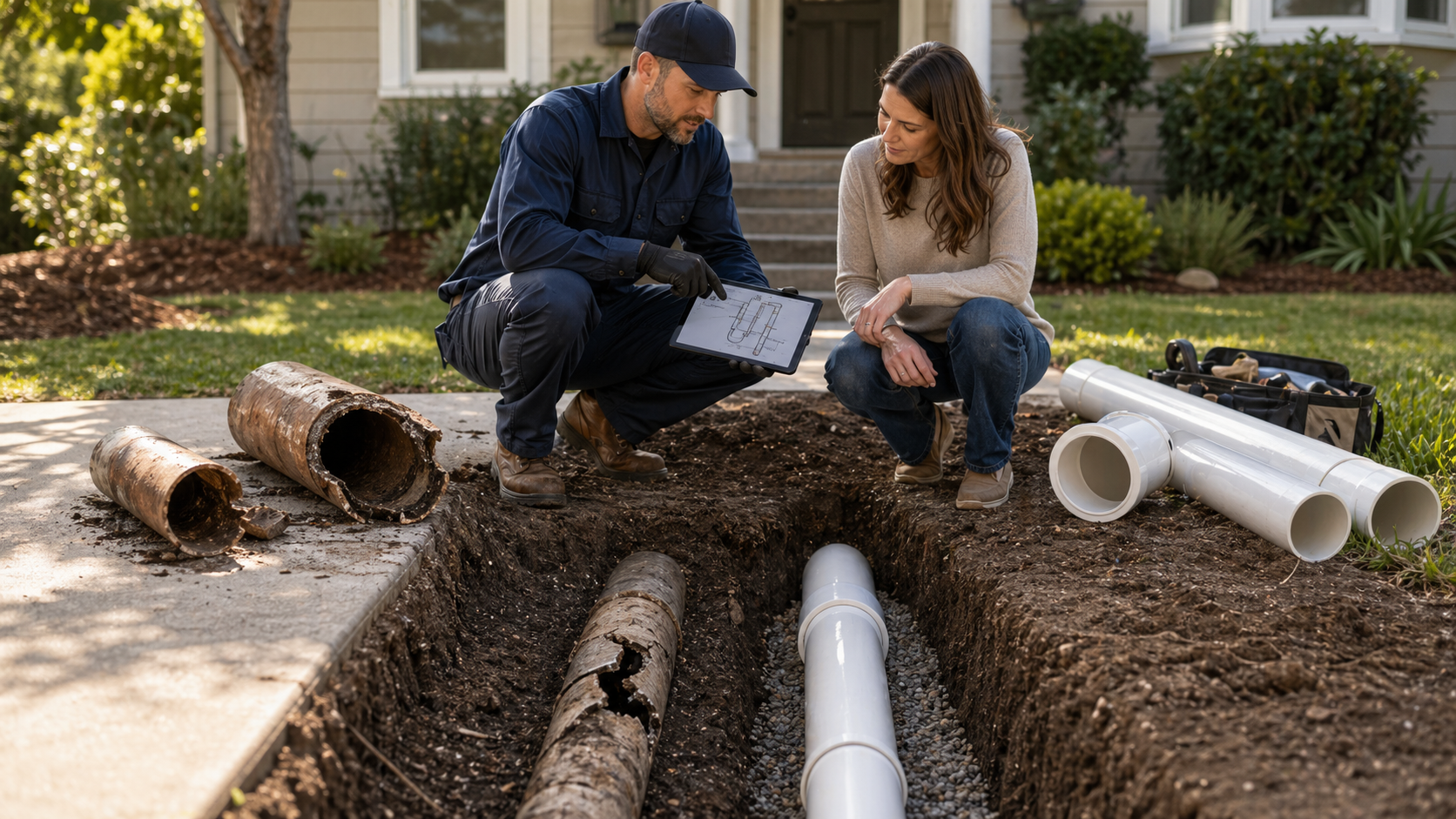
The difference between sewer line repair and sewer line replacement comes down to scope, condition, and long-term reliability. A line can often be repaired when the defect is isolated or still manageable, while replacement becomes more sensible when the failure is broader, more severe, or too repeat-prone to keep patching.
The challenge for homeowners is that the symptoms alone do not always tell you which path is smarter. That is why inspection and scope explanation matter so much.
These are the biggest questions behind the repair-versus-replacement decision.
This part of the article is here to add context, not urgency. In most cases, the more clearly someone understands the pattern behind the question, the easier it is to interpret the rest of the information without overreacting to one symptom.
For sewer line repair and replacement questions especially, the biggest misunderstandings usually happen when one detail gets all the attention and the wider context gets missed. A fuller explanation makes the rest of the article easier to read and use.
The best way to decide is to compare the actual condition of the line against the outcome you need from the job.
The point here is not to rush a decision. It is to make the question easier to think about in a calmer, more practical way so the customer can tell what matters, what may not matter, and what kind of explanation actually fits the situation.
This is also where a useful article earns trust, because it helps people sort out the issue for themselves before any service conversation happens. Clear context usually leads to better questions and less confusion.
These questions usually keep the decision grounded in the actual pipe, not just the sales language around it.
Small details often change how a situation should be interpreted. The more clearly someone can describe what they are seeing, the easier it is to make sense of the question and separate the useful details from the distracting ones.
These notes are here to make the topic easier to read, compare, and talk about. In many cases, a little more clarity early on prevents a lot of confusion later.
We help customers compare repair and replacement based on what the line can realistically support.
By the time someone reaches this part of the article, they usually want to understand how the information above connects to the actual service work. The goal is to make that connection clear without turning the article into a sales script.
Tying the topic back to sewer line repair and replacement helps the article stay grounded in real service context. It shows how the explanation relates to the work itself, which makes the page feel more useful and more complete.
These are the follow-up questions people usually ask once the main tradeoff is clear. They help narrow the choice without turning the article into a hard recommendation before the situation is fully understood.
When the topic is sewer line repair vs sewer line replacement, the useful next questions are usually about what condition, risk, or constraint makes one path more practical than the other.
Not always. Some lines still make good repair candidates. The better answer depends on the actual pipe condition, not on a rule that replacement always wins.
Yes. Once the full condition of the line is visible, the scope can become broader or narrower than the original symptoms suggested.
That is an important part of the decision, but it still needs to be balanced against line condition and what type of result the job has to achieve.