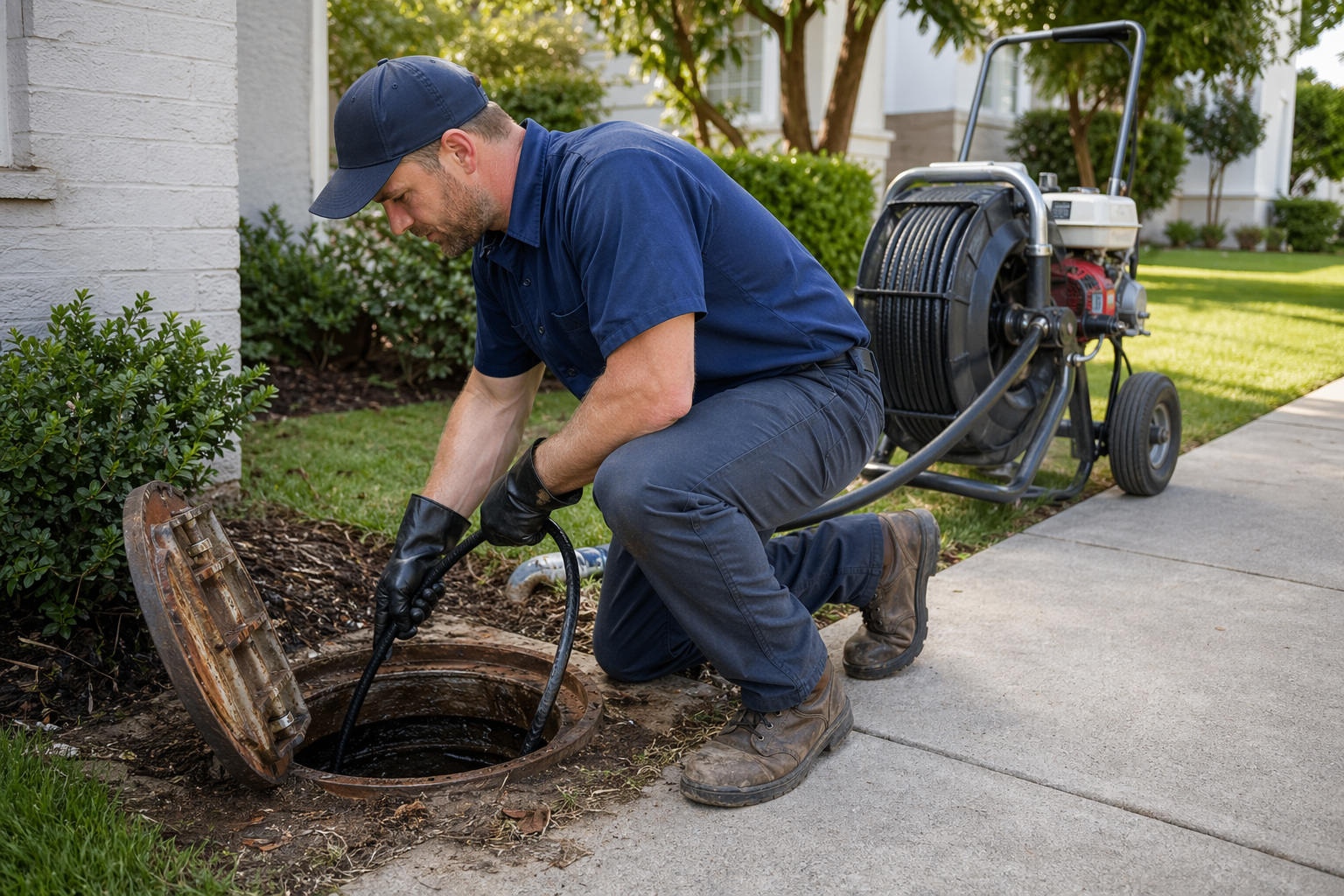
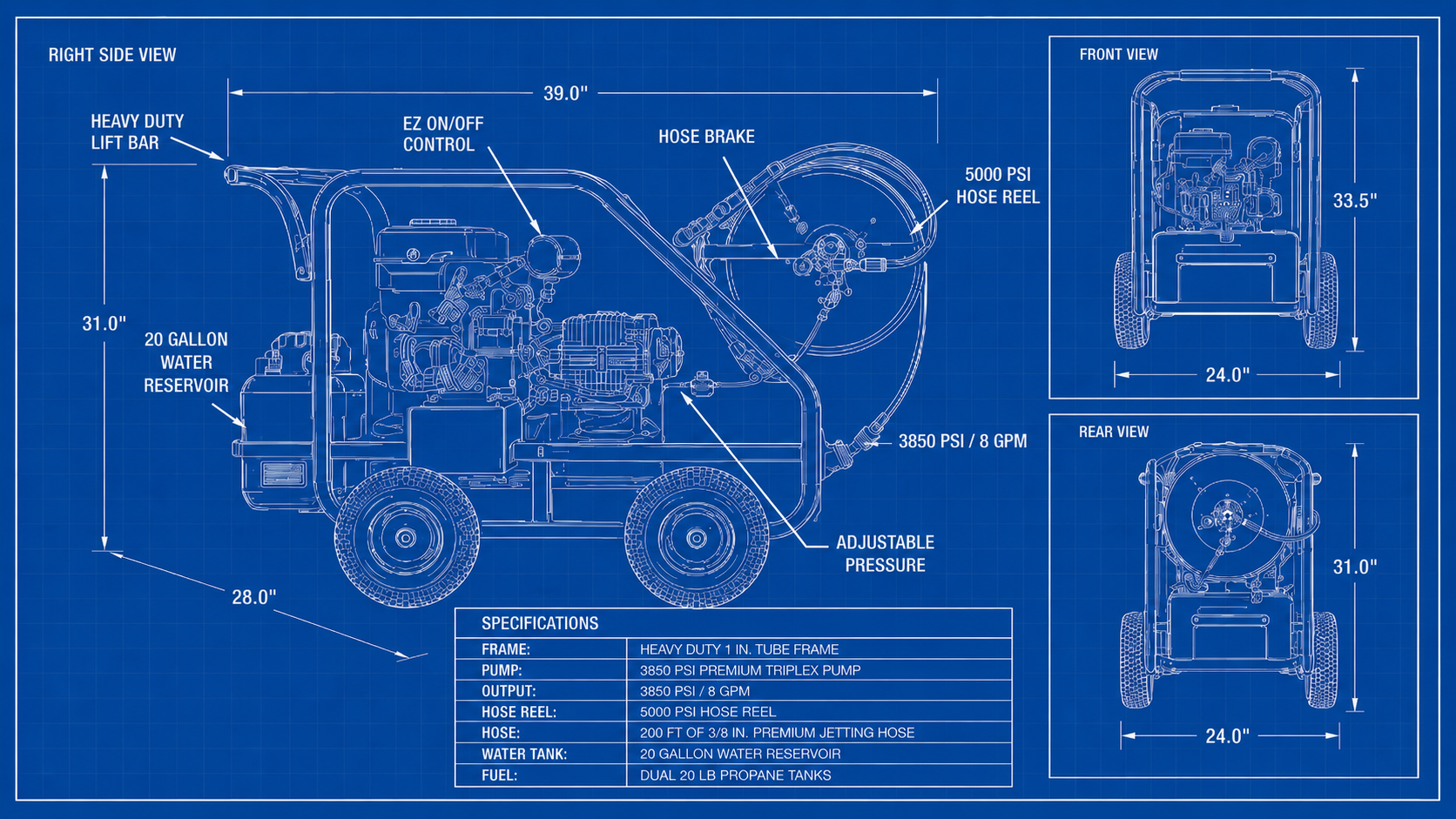
Not every property needs a maintenance plan. A one-time clog from a foreign object or a tree root that gets cut once and stays clear may not justify recurring service. But some properties have line conditions that produce repeat problems no matter how well the last cleaning went.
Properties with recurring clogs. If the same drain or sewer line has backed up more than once in the past year, the line has a pattern. Scheduled sewer cleaning at the right interval catches the buildup before it reaches the failure point.
Commercial kitchens and restaurants with grease buildup. Grease does not stop accumulating because you cleared the line last month. Commercial drain maintenance on a planned schedule — monthly, quarterly, or matched to your volume — keeps the line open and keeps health and code issues from becoming emergencies.
Older sewer lines with known conditions. Bellies, offsets, root intrusion points, and rough interior surfaces all accumulate debris faster than a clean line. Sewer line maintenance at regular intervals is the most cost-effective way to keep an aging line functional without jumping straight to replacement.
Multi-unit and property management. If you manage multiple residential units or commercial locations, a single maintenance relationship with coordinated scheduling is more efficient than calling for emergency service at each property separately.