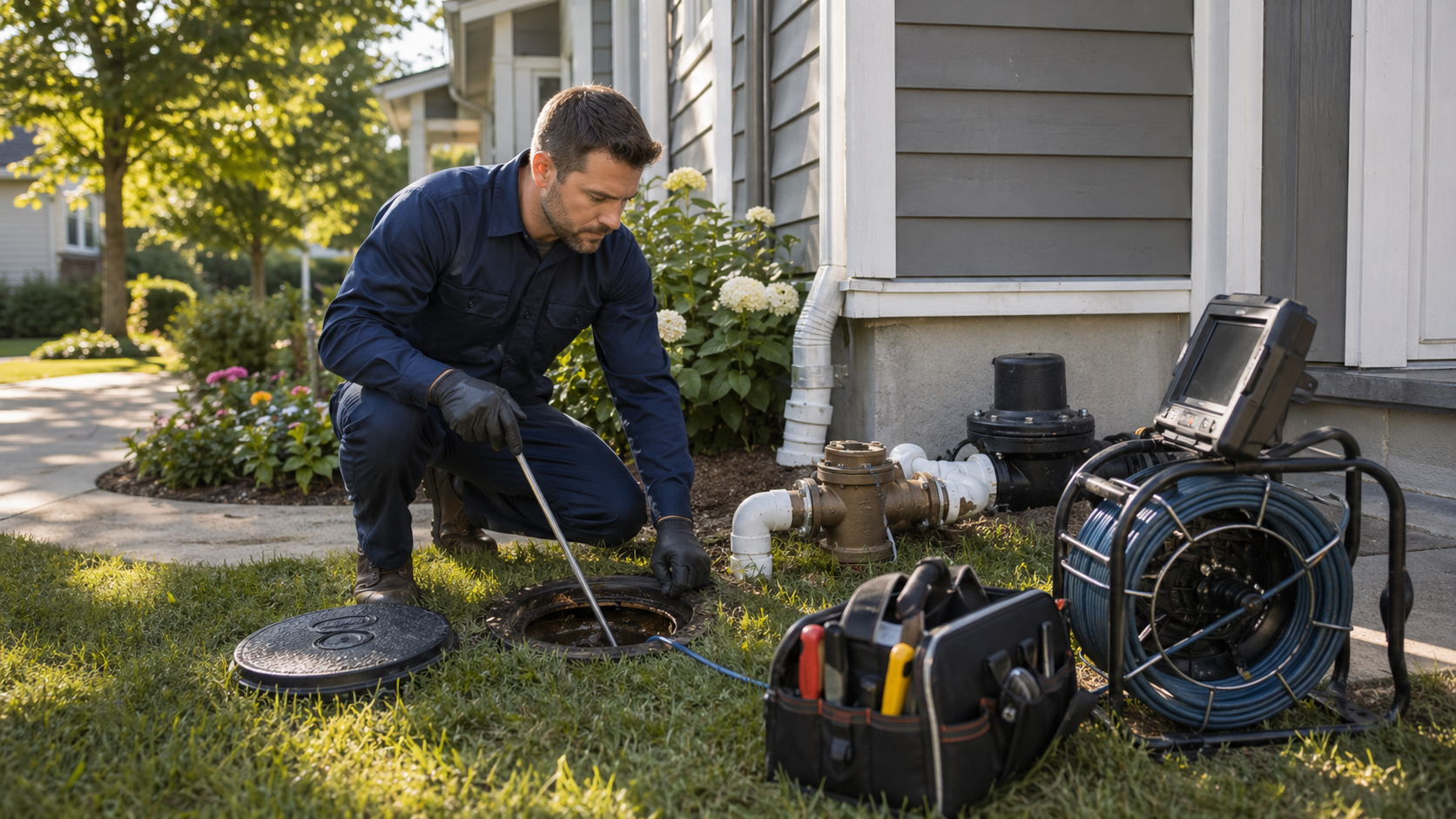
Sanitary Sewer Overflows (SSOs)
Supports: Sanitary sewer overflows can back up into buildings, damage property, and create public-health concerns; sewer systems carry domestic and commercial wastewater to treatment facilities.
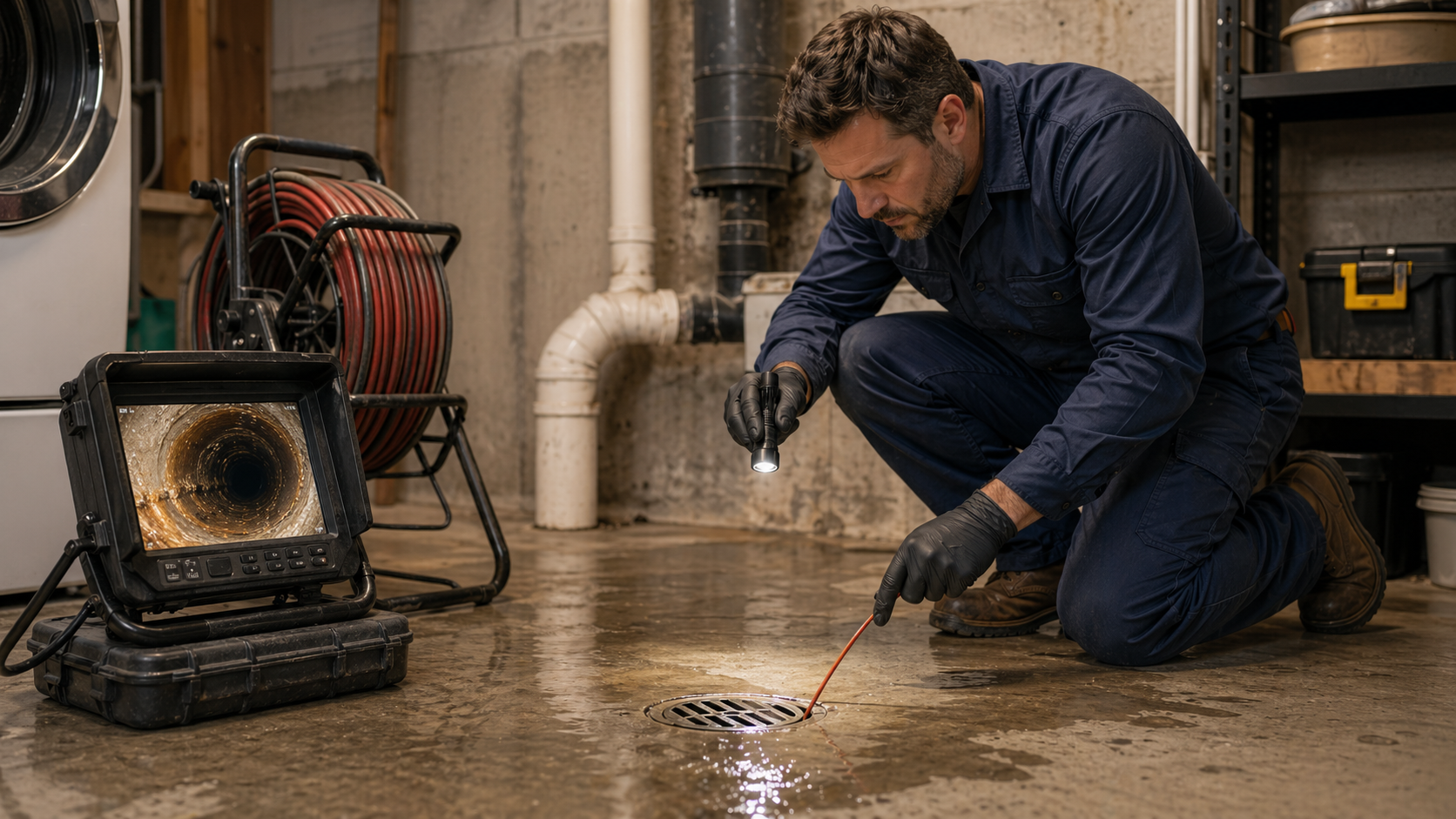
FLOOR DRAIN BACKUP: WHAT IT MEANS AND WHETHER THE PROBLEM IS THE DRAIN OR THE MAIN LINE
Blog Article
A floor drain backup is one of the most common — and most misunderstood — drain symptoms homeowners encounter. The floor drain sits at the lowest point in the house, which means it is the first place a main line backup surfaces. But it can also back up for reasons that have nothing to do with the main line. This article separates the six causes into two categories — local problems you may be able to handle and system problems that need professional service — so you know what you are dealing with before you call.
Start Here
Your floor drain is backing up. Water — or worse, sewage — is coming up through the drain instead of going down. Before you do anything else, answer one question:
What This Article Helps You Do
Quick Takeaway
A floor drain backup has six common causes. Three are local to the drain itself trap blockage, dry trap, local debris and three involve the main sewer line main line restriction, sewer surcharge, or structural pipe failure. The one-question diagnostic — "is anything else in the house acting up?" — separates the two categories. Local problems are usually fixable without professional equipment. Main line problems require camera inspection, cable clearing, or hydro jetting.
Your floor drain is backing up. Water — or worse, sewage — is coming up through the drain instead of going down. Before you do anything else, answer one question:
Is anything else in the house acting up?
If the answer is no — the floor drain is the only problem, every other fixture drains normally, and nothing gurgles or bubbles when you run water elsewhere — the problem is probably local to the floor drain itself.
What to Do Immediately When a Floor Drain Backs Up Before diagnosing the cause, protect your property.
Start with the normal pattern: wastewater should move away from the fixture, through the branch line, into the larger building drain or sewer lateral, and out toward the public or private collection system. Most confusion starts when one symptom is judged without locating where that pattern is breaking down.
For floor drain cleaning questions, the useful first step is separating a local fixture issue from a deeper line condition, because those two situations can look similar at the surface but lead to different next steps.
What to do: Pour a gallon of water into the drain to refill the trap. The smell should stop within minutes. If you have floor drains that rarely get used, pour water down them every few months to keep the trap seal intact. If the smell persists after refilling the trap, the trap itself may be cracked or the drain may have a venting issue — that warrants professional evaluation.
The goal is to move from guesswork to evidence. Good decisions usually come from the same sequence: define the symptom, locate the likely part of the system, check whether the issue is repeating, and decide whether cleaning, inspection, jetting, or repair planning fits.
That sequence keeps the article useful before any service conversation happens. It helps readers ask better questions and makes it harder for a vague diagnosis to sound more certain than it really is.
What to do: If this happens once during a major weather event, document it and contact your city's public works or sewer department. If it happens repeatedly, a backwater valve is the prevention tool — it physically prevents water from flowing backward through the floor drain during surcharge events. For backwater valve details, see Sewer Backup Prevention: What Actually Helps?
Small details often change the interpretation. Which fixture backed up first, whether more than one drain is affected, whether the problem returned after clearing, and whether there is odor or standing water all matter.
Use these notes to describe the issue clearly. A good description is often the difference between booking a narrow cleaning visit and starting with inspection or a broader sewer conversation.
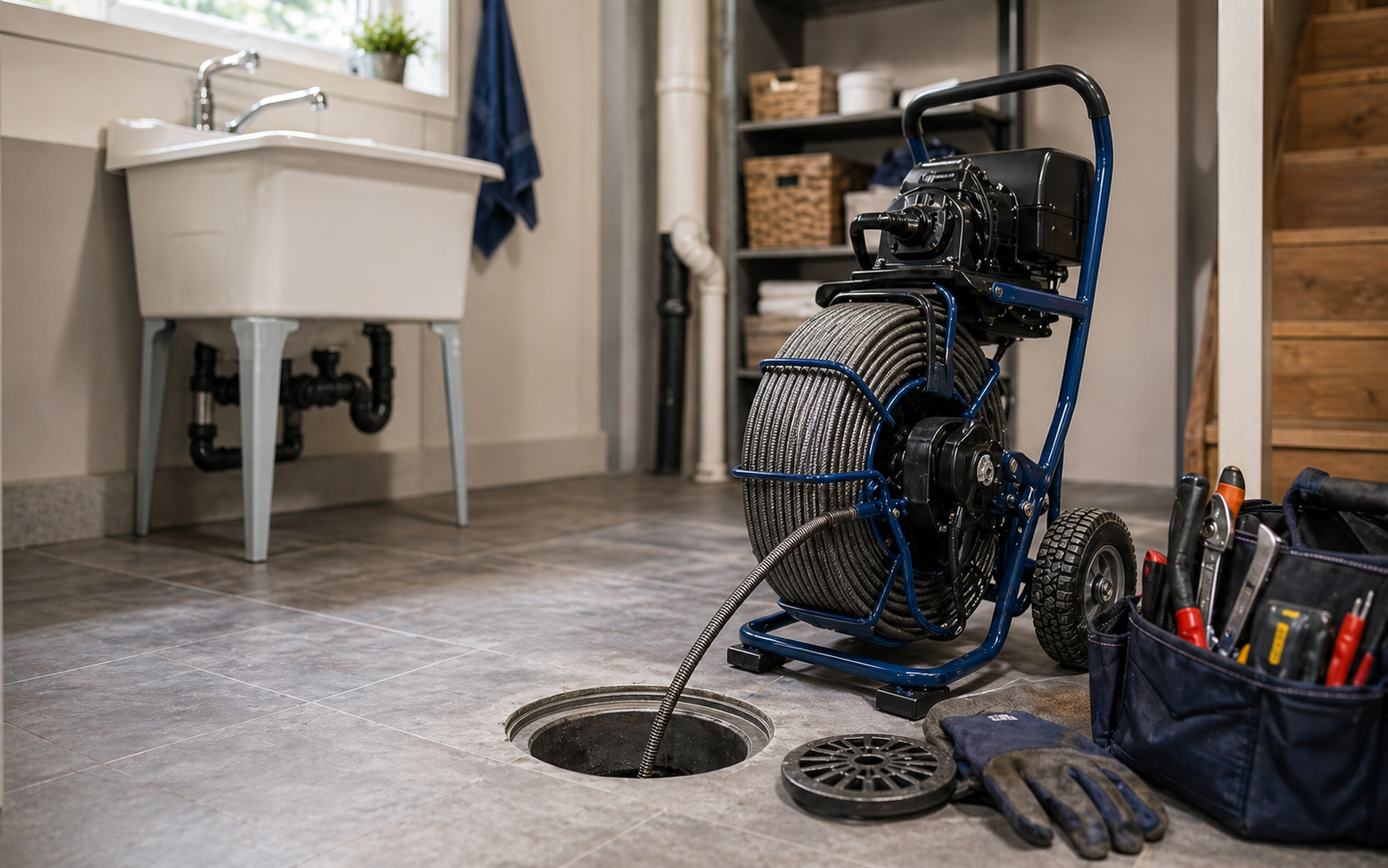
When you call Mountain West at 801-317-8104 or email info@mountainwesthydrojetting.com because your floor drain is backing up, here is what happens.
This is where the article connects back to real service work. The point is not to turn every concern into the biggest possible job; it is to match the symptom pattern to the least confusing next step that can actually answer the question.
Tying the topic back to floor drain cleaning keeps the advice grounded. The work should explain what was found, what is still uncertain, and why the recommended next step fits the evidence.
These follow-up questions turn the explanation into a practical decision tool. Definitions help, but the real value is knowing when the topic matters at a property.
For floor drain cleaning topics, the best next questions connect the concept to symptoms, access, inspection, and the next service decision.
These sources were used for background, claim checking, or local context. The article explains the topic in Mountain West's own words and does not copy outside article structure or long passages.
Supports: Sanitary sewer overflows can back up into buildings, damage property, and create public-health concerns; sewer systems carry domestic and commercial wastewater to treatment facilities.
Supports: Common sewer blockage contributors include fats, oils and grease, wipes and other non-flushable products, roots entering defects, sediment, and other materials.
Supports: Flooded or contaminated homes can involve sewage and mold hazards, so cleanup and reentry should be treated as a health-and-safety issue rather than only a plumbing nuisance.
Supports: Local Utah utility guidance can make the private-lateral responsibility clear: property owners may be responsible for maintenance and repair from the home to the city main, including tap connection, depending on jurisdiction.
Manual review note: Local ownership rules vary by city and utility. Treat this as regional context, not legal advice for every property.
Supports: A backwater valve allows sewage to flow in only one direction — out of the house. Plumbing code requires backwater valves when a fixture is installed on a floor below the next upstream manhole. When a backup occurs, the flapper seals to prevent sewage from entering the home.
Supports: Local sewer maintenance programs may remove roots, grease, and debris from public lines; bubbling, gurgling, or odors can also relate to venting and sewer-maintenance conditions.
Manual review note: Use as regional public-utility context only; it does not prove the cause of a private-property problem.
Supports: Utah wastewater programs cover municipal wastewater planning, onsite wastewater systems, operating permits, and related design requirements, reinforcing that drain and sewer issues connect to regulated infrastructure.
These are the quick answers most people want before they call, book, or decide on the next step.
A floor drain backup is one of the most common — and most misunderstood — drain symptoms homeowners encounter. The floor drain sits at the lowest point in the house, which means it is the first place a main line backup surfaces. But it can also back up for reasons that have nothing to do with the main line. This article separates the six causes into two categories — local problems you may be able to handle and system problems that need professional service — so you know what you are dealing with before you call. It connects the topic back to floor drain cleaning when readers are trying to decide on the right next move.
Your floor drain is backing up. Water — or worse, sewage — is coming up through the drain instead of going down. Before you do anything else, answer one question: It is most useful for readers trying to understand the issue before they book, compare services, or decide whether the symptoms point to a bigger sewer or drain problem.
If the issue sounds familiar, the usual next step is to review the floor drain cleaning page or compare it with main line drain cleaning before deciding whether to request a quote, book service, or call for faster guidance.
Mountain West Hydro Jetting serves Northern Utah and the Salt Lake corridor. You can reach us at 801-317-8104 or info@mountainwesthydrojetting.com.